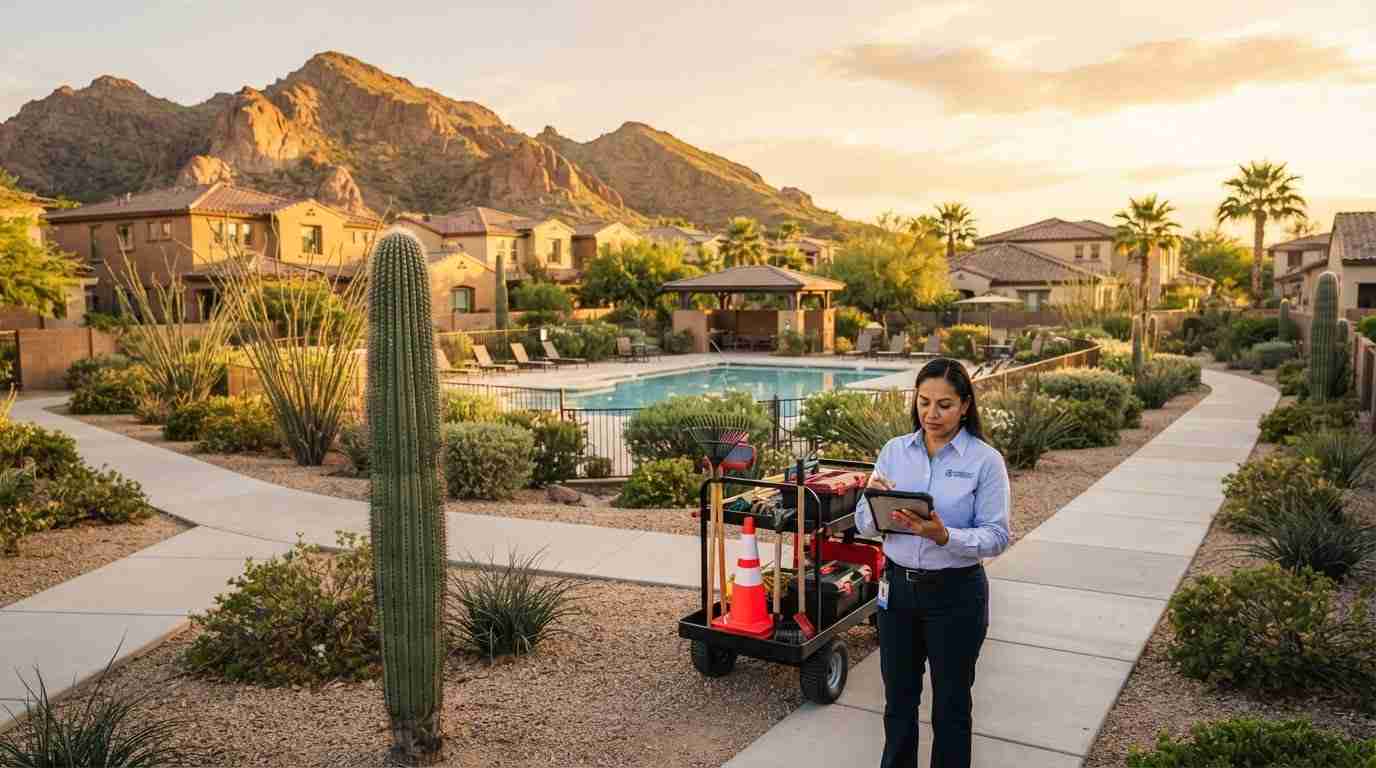
Common-area maintenance is a shared HOA expense, not just a line in the budget. Managing HOA common area maintenance costs means planning routine upkeep, addressing repairs before they worsen, and setting aside funds for major work. Shared areas can include amenities, sidewalks, streets, and shared building spaces.
It’s understandable to focus on monthly costs, especially when maintenance competes for limited funds. But postponing necessary work can leave common areas in poorer condition and make future decisions harder. Clear priorities and realistic budgeting help the board weigh routine services, urgent repairs, and longer-term needs.
This article explains what CAM charges mean in an HOA context, how associations can plan and track maintenance expenses, and how to prioritize urgent work alongside preventive care. You’ll also see how consistent upkeep can support a community’s appearance, safety, and property values.
Key Takeaways
- Separate routine upkeep, seasonal work, and major repairs in the budget so recurring needs and future projects are easier to plan.
- Use inspections and a clear work-order process to spot maintenance issues early and keep requests and follow-up organized.
- Prioritize urgent issues by their effect on safety, property damage, and access, while using governing documents to clarify who is responsible.
- Consistent care helps preserve the condition and appearance of shared spaces, while neglected areas can create safety concerns and affect owners’ perceptions of the community.
- Clear expense tracking and timely communication help residents understand how maintenance decisions shape the association’s budget.
What Are Common Area Maintenance (CAM) Charges?
In an HOA, common-area maintenance expenses cover care for property shared by residents. A useful budget separates routine operating costs from major repairs and future replacements.
Common CAM Expense Categories
Common-area maintenance expenses cover services and repairs needed to keep shared spaces usable and in good condition. HOA examples include landscaping, trash collection, lighting, sidewalks, parking areas, roofs, elevators, and pool upkeep. In commercial real estate, CAM charges are shared property costs, often estimated in an annual budget and billed to tenants monthly.
Commercial CAM may include landscaping, janitorial services, utilities, irrigation water, repairs, and parking-lot upkeep. Industrial properties may include lighting for loading docks and delivery areas; tenants commonly contract and pay for their own electricity. Janitorial service for industrial common areas may also be an expense. Commercial leases may define CAM narrowly or broadly, so tenant charges are not a universal formula for HOA assessments.
For a commercial property, a tenant’s pro-rata share is commonly calculated by dividing its rentable square footage by the property’s total rentable square footage. HOA expense responsibilities instead depend on the association’s governing documents and budget.
Budgeting and Forecasting Maintenance Expenses
An HOA budget forecasts operating expenses and identifies the funds available for upkeep. Associations can review past expenses to spot recurring costs, list maintenance tasks and their frequency, and use estimates to plan future spending. The U.S. Bureau of Labor Statistics notes that community association managers prepare financial statements and budgets and negotiate with contractors.
How should an HOA compare maintenance bids and choose contractors? Compare proposals against the same written scope, including materials, labor, timing, exclusions, and any maintenance schedule. A lower total may not cover the same work, so clarify differences before comparing bids.
Expense-tracking software can organize invoices, monitor spending against the budget, forecast future costs, and track reserve funds. This gives the board a clearer view of recurring expenses and emerging budget pressures.
Reserves and Unexpected Repair Funding
A reserve is money set aside for major common-area repairs and replacements, separate from routine operating funds. An HOA can plan regular reserve contributions in its annual budget, using anticipated projects, past expenses, and available financial records to guide decisions. Reserves help the board prepare for larger needs without treating every repair as a routine expense.
Can an HOA impose a special assessment for unexpected common-area repairs? It may be possible, but the association must follow the authority and procedures in its governing documents and applicable law. The board should explain the repair need, expected funding approach, and relevant decision process to owners.
How do HOAs budget for common-area maintenance? They forecast recurring work and repairs in the annual budget, using historical expenses and estimates to set priorities. How should an HOA build and fund a reserve for common-area repairs? Identify major future work, include regular contributions in the budget, and track reserve balances separately from operating expenses.
Preventive maintenance and work-order management
Preventive schedules and organized repair requests help boards address shared-area issues before they worsen. In Phoenix, inspections, storm cleanup, and routine upkeep can guide practical decisions about maintenance schedules and spending.
Preventive Maintenance and Inspections
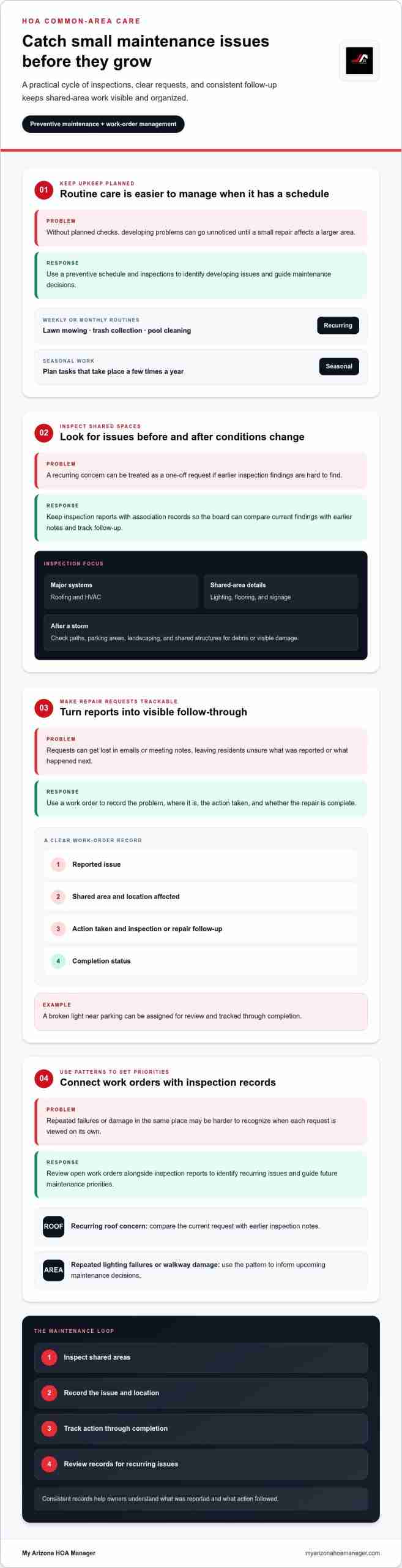
Preventive maintenance is planned care for shared areas, supported by inspections that identify developing problems. It helps the board act before a small repair affects a larger area. HOA routines may include weekly or monthly lawn mowing, trash collection, and pool cleaning; seasonal work may take place a few times a year.
Inspections can cover major systems such as roofing and HVAC, along with lighting, flooring, and signage. Inspection plans can help set the frequency and scope of checks. After a storm, checking paths, parking areas, landscaping, and shared structures can reveal debris or visible damage that needs attention.
Keep inspection reports with association records so board members can track findings and follow-up. For example, the board can compare a recurring roof concern with earlier inspection notes instead of treating it as an isolated request. Those records also help distinguish preventive work from repairs that have become urgent.
Work Orders and Responsive Repairs
A work-order process records a reported problem, its location, the action taken, and whether the repair is complete. This gives the board a consistent way to track residents’ concerns and keep requests from getting lost in emails or meeting notes.
For each request, record the shared area affected, the reported issue, and any inspection or repair follow-up. A broken light near parking, for example, can be assigned for review and tracked through completion. A maintenance request tracker can also let residents submit issues and follow their progress.
Clear records help owners understand what has been reported and what action followed. Reviewing open work orders alongside inspection reports can reveal recurring issues, such as repeated lighting failures or damage in the same walkway. Those patterns can guide future maintenance priorities.
Reducing Shared-Area Operating Costs
Cost control means reducing avoidable use and repeat work without skipping necessary care. For landscaping, native plants suited to the local climate can reduce watering and maintenance needs. Smart irrigation can adjust watering to weather and soil moisture, and may reduce water usage by up to 30%.
How can HOAs reduce landscaping, pool, and common-area utility costs? Match watering to local conditions, maintain irrigation equipment, and schedule pool cleaning and equipment checks consistently. Reviewing utility use and repair records can help the board spot waste or repeated problems.
Storm cleanup also benefits from a clear reporting route: residents can submit a location and description, while the board tracks inspection and follow-up. Boards seeking an organized approach to resident requests and maintenance follow-through can explore community maintenance coordination.
Maintenance prioritization and emergency response
Clear responsibility boundaries help Phoenix-area boards respond to urgent problems without confusing association upkeep with homeowner duties. Set priorities according to risk, the shared spaces affected, and the governing documents.
Board and Homeowner Responsibilities
The association’s governing documents define which spaces and repairs the HOA maintains and which are the homeowner’s responsibility. The board typically oversees common-area upkeep, but the exact division varies by community and location. A shared roof may be the association’s responsibility, while repairs inside a homeowner’s unit may remain the owner’s.
A responsibility matrix makes that division easier to apply. Review governing documents, warranties, and past maintenance records, then identify who is responsible for each asset and repair type. For example, list shared walkways separately from private patios and note who handles inspection, repair approval, and follow-up. Clear assignments reduce delays and help the board avoid charging association funds for work assigned to an owner.
Emergency response also requires clear responsibilities. A damaged shared gate, active roof leak, or unsafe walkway may need prompt attention because it affects access, property, or residents’ safety. The board can record the issue, identify responsibility, and arrange an appropriate response under its established process. Less urgent cosmetic work can be scheduled separately so it does not compete with immediate hazards.
Reviewing HOA Maintenance Spending
Homeowners can review maintenance spending by comparing budget categories, association records available to owners, and completed work in shared spaces. For example, consider a recurring landscaping charge alongside the services described in the budget and the condition of the grounds. This helps distinguish a question about service scope from a concern about the expense itself.
How can homeowners review or challenge HOA common-area maintenance spending? Review the governing documents and available budget or meeting records, then send the board a written question identifying the charge or work in question. Owners can also raise the concern through the community’s established meeting process and ask how the expense relates to common-area upkeep.
For a disputed repair, focus on specific details: the location, reported condition, work performed, and the association’s responsibility under the governing documents. A broken light near shared parking, for instance, is easier to discuss with its location and repair record than with a general objection to maintenance charges. The board can then explain whether the work addressed an urgent condition, recurring upkeep, or a planned project.
How common-area upkeep supports property values
Shared areas shape how residents and visitors experience an HOA community. Consistent landscaping, working lighting, and maintained amenities support a cared-for appearance, while neglect can create safety concerns and affect property values.
Condition, Safety, and Property Value
Visible maintenance issues can affect how people perceive a community. Dirty, broken, or disheveled common areas may lead to negative publicity or lower property values. A cracked sidewalk or neglected entrance, for example, can make the whole property appear less cared for, even when individual homes are well maintained.
Some maintenance issues also create direct safety risks. Improper pool maintenance can contribute to slips and falls, while broken fitness equipment can injure residents. These examples show why boards should weigh safety and property condition alongside operating expenses when setting priorities. Deferring a repair may leave the issue visible or expose residents to risk.
Owners dissatisfied with inadequate upkeep may choose to sell or bring a dispute against the HOA. Clear maintenance records and timely attention to reported issues help the board explain what work it considered and why. They also help distinguish planned improvements from repairs addressing an existing problem.
CAM Costs by Property Type
Common-area maintenance expenses depend on the property’s shared features and how they are used. Commercial CAM charges provide a useful comparison, but commercial lease allocations differ from HOA assessments. Office buildings may include janitorial services for lobbies, corridors, elevators, and restrooms, along with shared electricity allocated among tenants.
Retail properties may include landscaping, parking-lot lighting, and common-area utilities. Tenants typically pay their own electricity, while property and parking-lot lighting are exceptions. Industrial properties may include shared lighting, landscaping, parking, sidewalks, loading docks, and delivery areas. Industrial tenants commonly contract and pay for their own electricity because usage varies by tenant.
These differences matter because a property’s operating needs determine which shared services appear in its CAM expenses. A Phoenix HOA with a pool and landscaped grounds has different upkeep needs from a community centered on shared buildings and walkways. The association’s governing documents and budget define its responsibilities and planned expenses.
Planning Upkeep Around Community Needs
Boards can connect maintenance decisions to property condition by reviewing inspection findings, resident reports, and recurring work orders together. Repeated reports about pathway lighting, for example, may point to a persistent issue, while an isolated broken fixture may need only a targeted repair. This context helps the board explain its decisions and avoid treating every request as the same priority.
Budget choices should account for both current conditions and long-term upkeep. Landscaping, lighting, and amenity repairs each affect the appearance and use of common spaces. A documented plan helps owners understand which work protects shared property now and which projects are scheduled for later, without suggesting that any single maintenance decision guarantees a particular property value.
Common area maintenance costs
HOA common-area expenses depend on the shared property, its amenities, and the work needed to keep those assets usable. For Phoenix boards, managing HOA common area maintenance costs starts with identifying what the association maintains and separating recurring operations from larger repairs. This makes the budget easier to explain and gives owners a clearer view of what their assessments support.
What is a typical HOA common-area maintenance cost per unit or year? There isn’t one figure that fits every association. The amount depends on the community’s services and assets, their condition, the number of units sharing expenses, and planned reserve contributions. To estimate a per-unit share, divide the planned maintenance allocation by the units responsible for funding it.
Build the expense list around actual shared assets. Landscaping, trash collection, lighting, sidewalks, parking areas, roofs, elevators, and pools can all require upkeep. Security-related expenses may apply where the community has shared security systems or services. For instance, a pool community has operating needs that a community without a pool won’t have, while a shared building may need roof or elevator work.
Separate recurring operating expenses from major repairs and replacements. Routine service belongs in the operating plan; a substantial roof project may call for reserve funding or another board decision. This distinction helps owners understand whether an assessment supports ongoing services, an unexpected repair, or a future project. It also gives the board a practical framework for explaining changes in planned spending.
To forecast expenses, list each task, how often it occurs, and which asset it serves. Compare the plan with historical expenses and current estimates. In Phoenix, boards can review irrigation use alongside landscaping choices; climate-suited plants and irrigation controls can reduce water use and maintenance needs. Record completed work so future budgets reflect actual conditions and service needs.
Severe weather, market changes, and unexpected repairs can shift planned expenses. A useful budget identifies expected recurring work and shows how reserves relate to larger repairs. If a forecast changes, explain why, such as a new repair need or a change in service scope. That context helps owners understand why projected charges differ from earlier plans.
A sound process for managing HOA common area maintenance costs compares the per-unit amount with the maintenance plan behind it. Review which assets and amenities the plan covers, how major work is funded, and whether recorded expenses align with expectations. This gives owners a more relevant basis for assessing charges than comparing their association with a community that has different shared property.
My Arizona HOA Manager: Community Management
My Arizona HOA Manager helps HOA boards organize community operations through Community Management and Financial Management. According to data from the U.S. Bureau of Labor Statistics, labor and operational costs continue to impact property management, making structured oversight essential. When maintenance priorities, recurring expenses, and owner communication become difficult to coordinate, structured management connects the association’s administrative and financial work.
Financial Management supports budgeting, bookkeeping, accounting, and financial reporting, giving boards a clearer view of maintenance spending. Online Resident Portals provide a channel for community information, while Resale Documents support transactions involving homes in the association. These administrative services complement maintenance planning; contractors perform the landscaping and repairs.
If your board needs support coordinating association operations or understanding its financial processes, contact My Arizona HOA Manager to discuss community management.
Set Up Your Community’s Next Maintenance Cycle
The next useful step is to make maintenance decisions part of a routine the board can revisit. A clear cycle for reviewing priorities, recording decisions, and aligning spending with community needs makes future planning easier to follow. It also gives board members a shared reference point when conditions or priorities change.
A disciplined approach to managing HOA common area maintenance costs depends on financial information that is organized and easy to use. My Arizona HOA Manager offers Community Management and Financial Management to support association operations and financial processes. Resale Documents support owners and associations during property transactions.
If your board is ready to strengthen its approach to community administration and financial planning, contact My Arizona HOA Manager to discuss the support your association needs. Clear processes can help your community move forward with steady, informed decisions.
Frequently Asked Questions
How Are CAM Charges Calculated?
Commercial CAM charges are commonly allocated by each tenant’s share of a property’s rentable area, but HOA assessments follow the association’s governing documents. For example, a commercial tenant leasing 2,000 square feet in a 10,000-square-foot building has a 20% pro-rata share of eligible CAM expenses. Phoenix HOA owners should look to their community’s assessment formula rather than applying a commercial lease calculation.
What maintenance costs are HOA common areas responsible for?
An HOA may budget for costs tied to common property it is responsible for maintaining. Examples include shared walkways, roofs, lighting, parking areas, pools, and landscaping. The community’s governing documents help determine which areas and components are the association’s responsibility. In a Phoenix community, a shared pool might be an HOA expense, while a privately owned patio may be maintained by its owner.
What maintenance should HOAs schedule for common areas, and how often?
Schedule routine tasks such as lawn mowing, trash collection, and pool cleaning weekly or monthly, depending on the work plan. Seasonal tasks, such as facility winterization or system inspections, may occur a few times a year. Longer-term work, including painting or walkway repaving, may recur every few years. Phoenix-area boards can align schedules with inspection findings, governing documents, and the condition of each shared asset.
How do HOA governing documents and state laws affect common area maintenance costs?
Governing documents identify maintenance responsibilities and may outline inspection expectations, while state laws can also affect whether owners or the board handle particular work. For a Phoenix HOA, compare the relevant CC&Rs and bylaws with applicable Arizona requirements when deciding who pays for a repair or how an approval proceeds. This helps distinguish association expenses from owner responsibilities before work is budgeted.
What risks arise when an HOA underfunds common area maintenance?
Underfunding can leave needed work deferred, allowing damaged or neglected shared areas to persist. A poorly maintained pool or broken fitness equipment can create safety concerns, while shabby common areas may harm the community’s appearance and affect property values. In Phoenix, unresolved upkeep issues may also reduce owners’ confidence in the board’s maintenance decisions. Comparing planned work with available funding helps expose gaps early.