

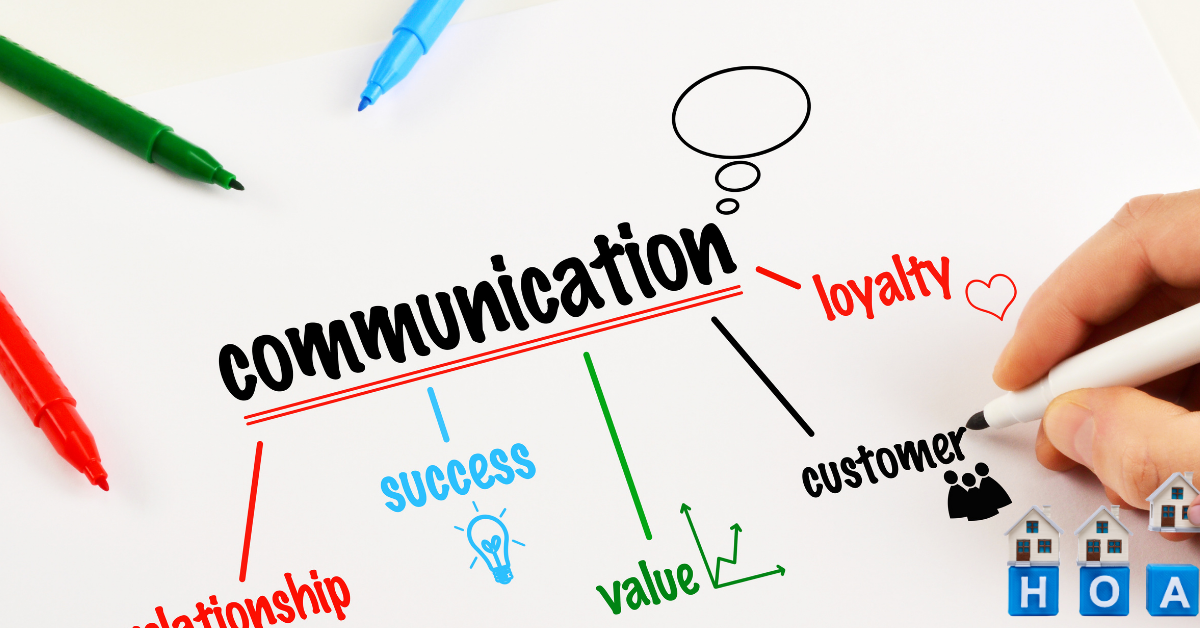
Communication is one of the most important responsibilities of any homeowners association. While budgeting, maintenance, and enforcing community standards are essential functions, none of them can be truly successful without clear, consistent, and transparent communication between the HOA board, community management team, and residents.
Poor communication often leads to misunderstandings, frustration, rumors, increased complaints, and declining trust in board leadership. On the other hand, communities that prioritize effective communication tend to experience higher homeowner satisfaction, stronger volunteer participation, fewer disputes, and greater confidence in board decisions.
As Arizona communities continue to grow and residents increasingly expect digital convenience, HOA boards must modernize the way they share information, collect feedback, and respond during emergencies.
This guide explores proven HOA communication strategies that help boards improve transparency, strengthen relationships with homeowners, and create healthier communities.
Why HOA Communication Matters
Every decision made by an HOA affects residents in some way.
Whether the board is approving a landscaping project, increasing assessments, scheduling pool maintenance, or updating parking rules, homeowners deserve timely, accurate information.
Effective communication helps:
- Build trust between homeowners and board members
- Reduce misinformation and rumors
- Increase compliance with community rules
- Encourage resident participation
- Improve attendance at meetings
- Reduce conflicts
- Support financial transparency
- Strengthen the overall sense of community
According to the Community Associations Institute (CAI), transparent communication is one of the defining characteristics of successful community associations and contributes to healthier governance and homeowner engagement.
The Cost of Poor Communication
When communication is inconsistent or unclear, small issues often become major problems.
Common consequences include:
- Angry homeowners
- Increased complaints
- More violations due to misunderstanding
- Lower meeting attendance
- Distrust of board decisions
- Social media rumors
- Legal disputes
- Reduced volunteer involvement
Many homeowner conflicts begin not because of the decision itself—but because residents feel excluded from the process.
Transparency often matters just as much as the outcome.
Principles of Effective HOA Communication
Successful HOA communication strategies are built around several core principles.
1. Be Transparent
Residents appreciate honesty.
Explain:
- Why decisions are made
- How funds are spent
- What projects are planned
- Expected timelines
- Possible delays
- Board priorities
When homeowners understand the reasoning behind decisions, they are far more likely to support them.
2. Communicate Regularly
One of the biggest mistakes boards make is communicating only when problems occur.
Instead, establish a regular communication schedule such as:
- Monthly newsletters
- Weekly updates during projects
- Quarterly financial summaries
- Annual planning reports
Consistency builds confidence.
3. Keep Messages Clear
Avoid legal jargon whenever possible.
Instead of writing lengthy policy explanations, use simple language that answers homeowners’ questions directly.
Residents should immediately understand:
- What happened
- Why it matters
- What they need to do
- Important deadlines
- Where to ask questions
4. Use Multiple Communication Channels
Every resident communicates differently.
Some prefer email.
Others rely on community websites, text alerts, printed notices, or resident portals.
A successful HOA uses several communication methods rather than relying on only one.
Best Communication Channels for HOAs
Email remains one of the most effective communication tools.
Use email for:
- Meeting notices
- Maintenance updates
- Budget information
- Event announcements
- Rule reminders
- Emergency notifications
Emails should be concise and easy to read.
HOA Resident Portal
Modern resident portals allow homeowners to:
- Pay assessments
- Submit maintenance requests
- View governing documents
- Download meeting minutes
- Review architectural requests
- Access community calendars
- Receive announcements
Digital portals improve transparency while reducing administrative work.
Community Website
A community website serves as the central information hub.
Useful content includes:
- Board contacts
- Governing documents
- Community rules
- FAQs
- Forms
- Calendar
- News
- Vendor contacts
Keeping the website updated reduces repetitive homeowner questions.
Text Messaging
SMS alerts work well for urgent issues.
Examples include:
- Water shutoffs
- Gate closures
- Storm warnings
- Emergency repairs
- Road closures
Text messages should be reserved for time-sensitive updates.
Printed Notices
Although digital communication continues to grow, printed notices remain important for some residents.
Physical postings work well for:
- Clubhouse announcements
- Pool closures
- Meeting reminders
- Community events
Using both digital and physical communication ensures broader accessibility.
The Importance of Two-Way Communication
Communication should never be one-sided.
Residents want opportunities to ask questions, express concerns, and share ideas.
Effective HOA communication strategies include listening as much as informing.
Ways to encourage homeowner feedback include:
- Online surveys
- Open forums
- Question-and-answer sessions
- Suggestion boxes
- Resident committees
- Town hall meetings
Listening builds trust and helps boards identify concerns before they become larger issues.
Communication During Board Meetings
Board meetings provide one of the most important opportunities for transparency.
Meeting notices should clearly state:
- Date
- Time
- Location
- Agenda
- Public comment opportunities
Following each meeting, distribute approved minutes promptly.
Check now: The Role of an HOA Board: Responsibilities, Challenges, and Best Practices
Meeting summaries can also highlight:
- Key decisions
- Upcoming projects
- Budget updates
- Committee reports
Residents appreciate knowing what occurred without attending every meeting.
Check also: HOA Community Management for Arizona Communities: What It Includes and Why It Matters
Financial Transparency Builds Confidence
Financial matters are among the most sensitive HOA topics.
Boards should communicate openly about:
- Annual budgets
- Reserve funding
- Major repairs
- Assessment increases
- Vendor contracts
- Capital improvement projects
Visual charts, simple summaries, and budget highlights make financial information easier for homeowners to understand.
Arizona homeowners also have statutory rights regarding association records. The Arizona Planned Communities Act outlines record inspection requirements that promote transparency and accountability within many homeowners associations.
Check also: HOA Budget Planning: How to Build a Strong and Sustainable Annual Budget
Clear communication is essential, but it becomes even more effective when homeowners understand how their association’s finances are managed. At My Arizona HOA Manager, our HOA Financial Management Services help boards improve transparency through accurate budgeting, detailed financial reporting, reserve planning, assessment collection, and clear communication about your community’s financial health. Explore our HOA Financial Management Services to see how professional financial management can strengthen trust and confidence throughout your Arizona community.
Crisis Communication for HOA Communities
Unexpected situations require fast, accurate communication.
Examples include:
- Severe weather
- Wildfires
- Flooding
- Water outages
- Security incidents
- Utility failures
- Major infrastructure repairs
Residents look to the HOA for reliable information during emergencies.
Elements of an Effective Crisis Communication Plan
Every HOA should prepare before emergencies happen.
A crisis communication plan should identify:
- Primary spokesperson
- Emergency contact information
- Communication channels
- Backup communication methods
- Vendor contacts
- Local emergency resources
- Update frequency
Preparation reduces confusion when quick action becomes necessary.
Find out the free HOA emergency plan built specifically for Arizona HOAs.
Communicate Quickly
Silence creates uncertainty.
Even if all answers are not yet available, communicate what is currently known.
For example:
“We are aware of the water main break affecting Buildings A and B. Contractors are on-site, and we will provide another update by 3:00 PM.”
Frequent updates reassure residents that the situation is being managed.
Address Rumors Early
Social media can spread misinformation rapidly.
Boards should correct inaccurate information quickly using official communication channels.
Providing factual updates helps maintain credibility.
Using Technology to Improve HOA Communication
Technology has transformed community management.
Many Arizona HOAs now use digital management platforms that simplify communication between boards, managers, vendors, and homeowners.
Useful technologies include:
- Resident portals
- Mobile apps
- Electronic voting
- Online maintenance requests
- Digital document storage
- Automated reminders
- Online payment systems
These tools improve convenience while reducing administrative costs.
Social Media: Helpful but Not Official
Many communities maintain private Facebook groups or neighborhood social platforms.
These spaces can encourage community engagement but should not replace official communication.
Official notices should always be distributed through established HOA communication channels.
Social media discussions may contain inaccurate or incomplete information.
Communicating Rule Changes
Rule changes often generate strong reactions.
Boards should communicate changes carefully.
A successful announcement should explain:
- What is changing
- Why the change is needed
- When it takes effect
- How residents may be affected
- Where to ask questions
Providing context reduces resistance.
Handling Resident Complaints Professionally
Complaints are inevitable in every community.
Responding professionally can prevent escalation.
Best practices include:
- Acknowledge receipt promptly.
- Listen without becoming defensive.
- Investigate fairly.
- Respond consistently.
- Reference governing documents when applicable.
- Explain the next steps.
Even when homeowners disagree with the outcome, respectful communication often preserves trust.
Build a More Connected Community with Professional HOA Management
Effective communication is just one part of a well-managed homeowners association. At My Arizona HOA Manager, our HOA Community Management Services help boards improve transparency, streamline operations, support homeowner engagement, and foster stronger communities. Learn how our experienced team can help your Arizona HOA communicate more effectively while managing your community with confidence.
Communication Tips for New HOA Board Members
New board members sometimes hesitate to communicate because they worry about saying the wrong thing.
A few simple habits can make a significant difference:
- Respond promptly
- Be respectful
- Stay factual
- Avoid emotional responses
- Follow established communication policies
- Maintain confidentiality where required
- Coordinate messaging with the community manager
Professional communication reflects positively on the entire association.
Measuring Communication Success
HOAs should periodically evaluate whether their communication efforts are working.
Helpful metrics include:
- Newsletter open rates
- Resident survey responses
- Meeting attendance
- Website visits
- Portal adoption
- Complaint trends
- Volunteer participation
- Response times
Reviewing these indicators helps boards continually improve homeowner engagement.
Building Long-Term Community Trust
Trust develops gradually through consistent actions.
Residents appreciate boards that:
- Share information openly
- Explain decisions
- Welcome feedback
- Communicate respectfully
- Follow through on commitments
- Admit mistakes when necessary
- Keep residents informed during difficult situations
Transparency strengthens the relationship between the board and homeowners while creating a more positive community culture.
Our Final Thoughts on HOA Communication Strategies
Strong HOA communication strategies are about much more than sending emails or posting notices. They create the foundation for transparency, accountability, and community engagement.
Arizona HOA boards that communicate consistently, embrace modern digital tools, encourage homeowner participation, and prepare for emergencies are better equipped to navigate challenges while maintaining resident confidence. As communities continue to evolve, communication will remain one of the most valuable investments an HOA can make in its long-term success.
HOA Communication Strategies – Frequently Asked Questions
What are the best HOA communication strategies?
The most effective HOA communication strategies include regular email updates, resident portals, community websites, meeting transparency, homeowner surveys, and clear crisis communication plans. Using multiple communication channels ensures more residents stay informed.
How often should an HOA communicate with residents?
Most associations benefit from monthly newsletters, timely project updates, quarterly financial summaries, and immediate communication for emergencies or significant community issues.
Why is transparency important for HOA boards?
Transparency helps homeowners understand board decisions, builds trust, reduces misunderstandings, and encourages greater participation in community governance.
Should HOAs use social media?
Social media can help build community engagement, but official notices should always be distributed through approved communication channels such as email, resident portals, or the community website.
How can technology improve HOA communication?
Resident portals, mobile apps, online payments, electronic voting, digital maintenance requests, and automated notifications make communication faster, more convenient, and more accessible for homeowners.
Looking for experienced support for your community? Explore our HOA Services to discover how My Arizona HOA Manager helps boards streamline operations, improve communication, and create thriving Arizona communities.


